Leffingwell Ranch overview
Sewer Camera inspection in Leffingwell Ranch
Why we work here
Leffingwell Ranch homes have the combination that makes sewer symptoms worth investigating early: established residential plumbing, mature yard trees, and routine landscape irrigation. Roots can exploit a small opening at a joint, while settled debris or grease can turn a partial restriction into a full backup. We see homeowners call after repeated slow drains, toilet bubbling, or wastewater returning through a low fixture. The service is useful before a sale, after a backup, or when a repair quote depends on knowing whether damage is localized or extends farther down the line. Near Leffingwell Elementary School and the park, we plan around household access and school-area traffic while keeping the inspection focused on your property.
Clear answers for residential sewer lines and laterals
Sewer Camera inspection in Leffingwell Ranch is a plumbing diagnostic service that uses a camera inside an accessible sewer line to locate blockages, damage, and recurring backup causes. Aron Leakage Master works with homeowners throughout this primarily residential area, where established homes, mature landscaping, and individual cleanout layouts shape how an inspection is performed. We check access first, select a suitable camera, and document what the lens shows rather than assuming the problem sits near the drain opening.
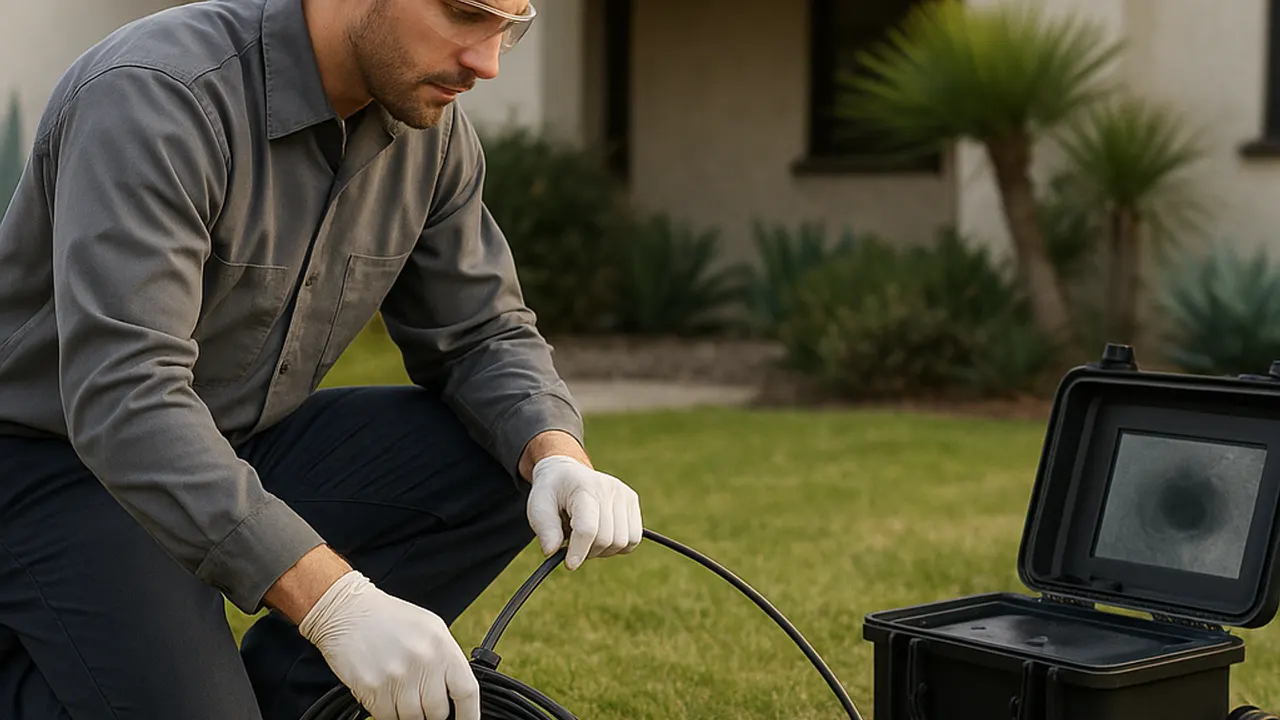
Our technicians use a push-rod sewer inspection camera and video monitor and recording system to trace the line from a cleanout where access allows. The image helps distinguish tree root intrusion from grease buildup, a shifted joint, or standing water. We serve Leffingwell Ranch alongside South Whittier, East Whittier, and Whittwood, bringing local sewer pipe inspection near Leffingwell Ranch to homes in ZIP codes 90604 and 90605. We also work across Los Angeles County, with service centered on Whittier, California.
A clear recording gives you a better basis for deciding whether cleaning, a follow-up inspection, or repair is appropriate. We explain the location and condition we can see, including limits caused by access or water in the line. You leave with a direct account of the findings, not a guess based on symptoms alone.