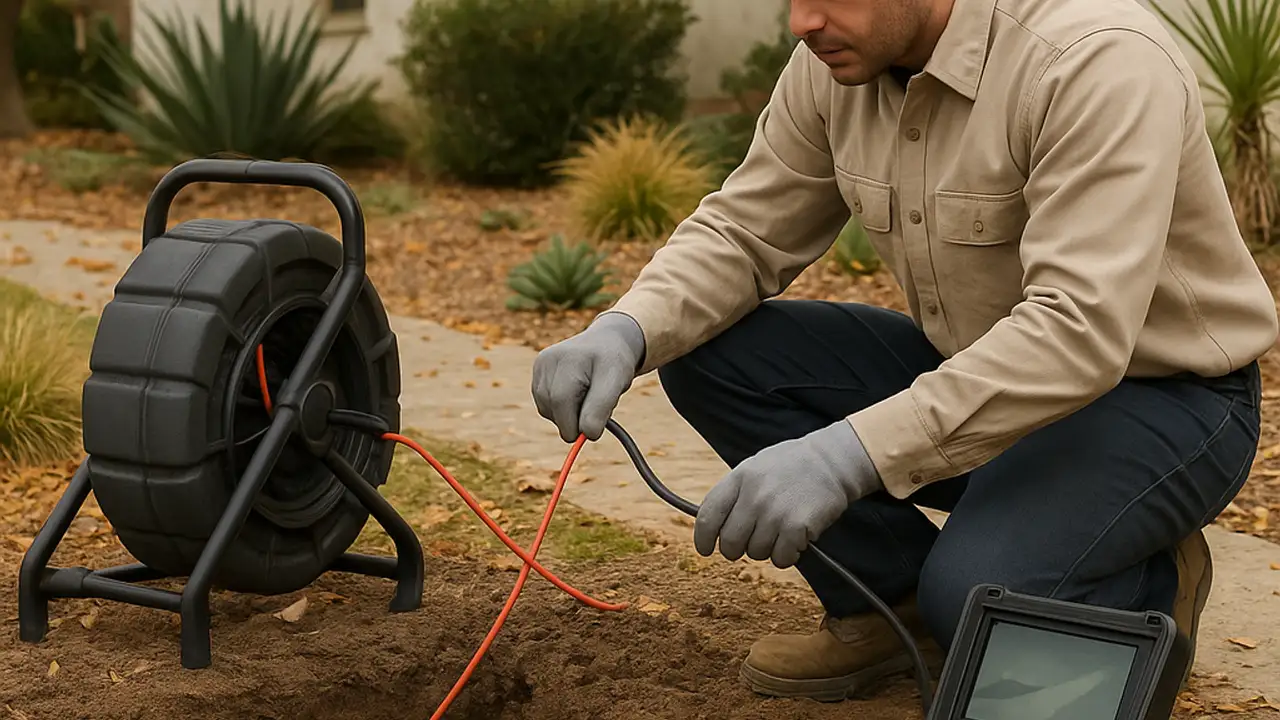
Mature trees affect sewer line inspections in Whittier by placing roots near buried pipes and making a camera inspection important for locating cracks, open joints, and root growth before a blockage becomes a backup. Roots do not usually break into an intact, sealed pipe; they exploit an existing opening, then expand as they seek moisture and nutrients. Mature trees and sewer line inspections in Whittier is a local diagnostic topic focused on finding root entry and pipe damage before repair decisions are made. We explain what the camera shows, which symptoms matter, and how you can reduce repeat clogs without guessing at the cause.
Whittier's established residential streets include older homes, large shade trees, and sewer laterals that have spent decades underground. A tree's visible trunk does not mark the full root system, and the precise route of a private sewer line is not always obvious from the yard. A video inspection lets us check the pipe itself rather than infer its condition from a slow drain alone.
How do mature trees affect sewer lines in Whittier?
Mature trees affect Whittier sewer lines when fine roots reach a leak or loose joint, enter the opening, and grow into a mass that catches waste and paper. Their presence changes where we pay close attention during inspection, but the camera-not the tree's location-confirms whether the pipe is affected.
Roots naturally spread outward and downward in search of water. A sewer line with a separated joint, a small crack, or a worn connection can release enough moisture to attract root tips. Once inside, even hairlike roots can collect grease, wipes, and other debris. The first sign you notice is often a recurring blockage, not a root appearing in your yard.
Age and material matter. Older clay sections have joints at regular intervals, while older cast iron can corrode or become rough inside. A newer pipe can also have a damaged connection, so age alone does not prove that roots are present. For Whittier tree roots and sewer pipes, the useful questions are where the pipe runs, what condition its joints are in, and whether the symptoms recur in the same area.
Roots do not need to be directly beneath the trunk. Fine roots can extend several times beyond a tree's canopy, and soil conditions, irrigation, and existing defects influence their route. In a built-up yard, a tree near the sidewalk, driveway, or boundary can still be relevant to the path between a home and the public sewer connection.
If your home has older plumbing or a large tree close to the lateral, our Sewer Camera inspection Whittier CA service helps identify the cause before you decide on cleaning or repair. A camera is useful precisely because a symptom does not tell you whether the problem is roots, a belly in the pipe, corrosion, or an unrelated obstruction.
What a sewer camera reveals near large trees
A sewer camera inspection in Whittier shows the pipe interior, the location of visible roots, and the defects that may have let them enter. We guide a waterproof camera through an accessible cleanout or other suitable opening and watch the live image as it travels through the line.
As we move the camera, we note distance from the entry point, changes in pipe direction, standing water, cracks, joint gaps, and obstructions. The footage can show whether roots form a few wisps at one joint or a dense mass that significantly narrows the passage. It can also show when a suspected root issue is actually a different defect.
Distance markings help relate a finding inside the pipe to a practical location along the route. They do not automatically pinpoint a spot on the surface to the inch; bends, pipe depth, and access conditions affect that estimate. We use the video and measurements together to describe the likely trouble area and the evidence supporting that conclusion.
A sewer camera inspection near mature trees is not the same as viewing the tree's full root network. The camera sees the pipe interior only. It cannot show roots outside the pipe or guarantee that every section was inspected if a blockage prevents the camera from passing. If we cannot advance through debris, that obstruction itself becomes a finding and may require cleaning before a complete follow-up view.
For a home with repeated slow drains or a line that has already been cleared, a Residential sewer camera inspection Whittier CA can help us check the private line and document what is happening inside it. We look for the entry point and the pipe condition around it, rather than treating every tree as the culprit.
Which signs point to root intrusion?
Recurring drains and backups in Whittier can signal root intrusion when they return after clearing, affect more than one fixture, or coincide with a camera-visible obstruction in the sewer lateral. No single symptom proves roots are present, so we match what you experience with what the camera shows.
A single slow sink can come from a local branch drain, a trap, or buildup near the fixture. Several fixtures slowing together-especially toilets, tubs, and lower-level drains-raises concern about a shared downstream section. A gurgling toilet after another fixture drains can also indicate restricted flow or trapped air in the system.
Watch for patterns rather than one-off events:
- A main drain backs up more than once after snaking or cleaning.
- Several fixtures drain slowly at the same time.
- You hear gurgling from a toilet or floor drain when water runs elsewhere.
- Wastewater appears at a low drain when a toilet is flushed or a washing machine empties.
- The blockage returns in a similar interval or at a similar level of household use.
A sewage smell or damp patch outside can add context, but neither confirms a broken lateral. Irrigation leaks, roof drainage, and other plumbing problems can create similar clues. Root intrusion risks for older sewer lines rise when joints have opened or pipe walls have deteriorated; the inspection has to distinguish visible roots from the underlying defect that allowed them in.
When a blockage repeatedly comes back, our Sewer line blockage and root intrusion inspection Whittier CA focuses on locating the obstruction and checking the pipe around it. That distinction matters: clearing a root mass can restore flow, but it does not close an open joint or repair a crack.
How to prevent recurring tree-root blockages
Whittier homeowners can reduce recurring tree-root blockages by identifying the entry point, addressing the pipe defect, and setting inspection intervals based on the line's actual condition. Removing roots without correcting an open joint often treats the obstruction but leaves the route back into the pipe.
Start with evidence. A camera inspection establishes whether roots are present, where they enter, and how much of the pipe remains open. If a camera cannot pass a dense blockage, cleaning may be needed first; a second camera pass then checks the pipe more clearly. We can explain what the footage supports before you choose a next step.
Possible next steps depend on what we see. A localized, accessible root mass may be cleared, while a cracked, separated, or badly deteriorated section may need repair. If the pipe is generally sound, the inspection can provide a baseline for monitoring. Where damage is extensive, a repair assessment helps determine whether a targeted repair or a broader solution fits the line.
There is no universal schedule for every root-prone lateral. A pipe with an open joint and a history of repeat blockages deserves closer follow-up than a sound line with no symptoms. As a practical starting point, homeowners with documented root entry can discuss a check every 12 to 24 months, then adjust based on how quickly roots return, cleaning history, and the camera findings.
Good household habits help avoid adding material that catches at a rough joint. Put wipes, cooking grease, and hygiene products in the trash rather than the toilet or drain. These habits do not stop roots from entering a defective pipe, but they reduce the debris available to build a blockage around them.
Common mistakes around root-affected sewer lines
Whittier homeowners often lose time and money by treating recurring sewer symptoms without confirming the cause inside the pipe. A clear drain after a quick intervention does not establish that the line is structurally sound.
One common mistake is assuming that every nearby tree has damaged the sewer. Roots may be close to a line without entering it, and a backup may come from a collapsed section, a sag, grease buildup, or a blockage farther downstream. We rely on the camera image to identify the problem rather than assigning blame based on the tree's size.
Another mistake is repeatedly clearing the same section without documenting the result. If you do not know where the obstruction sits or whether the camera passed beyond it, you cannot tell if the same defect is causing the next backup. Keep notes about when the drain was cleared and how soon symptoms returned.
- Do not assume a chemical drain product will remove roots or repair a pipe opening.
- Do not plant a replacement tree directly over a known damaged sewer route without considering the line's location.
- Do not treat a temporary return to normal drainage as proof that roots are gone.
Be careful with the word "root treatment." Some products can suppress small roots, but they do not reconnect a separated joint or rebuild a cracked pipe wall. The inspection findings should guide the response, and recurring symptoms deserve a check of the pipe after clearing.
When to call a professional
Whittier homeowners should arrange a sewer camera inspection when a main drain backs up repeatedly, multiple fixtures slow together, or a previous clearing did not prevent symptoms from returning. A prompt inspection can show whether the line needs cleaning, monitoring, or repair.
Call sooner if wastewater is backing up into a tub or floor drain, or if more than one fixture is affected at once. Avoid running additional water while sewage is rising; more discharge can worsen the backup. If you have a single slow sink and every other fixture works normally, the trouble may be limited to that branch, but a repeat pattern still deserves attention.
At Aron Leakage Master, we inspect the line, explain what the camera reveals, and connect the finding to a sensible next step. We serve homes across Whittier, including older neighborhoods where mature landscaping and aging sewer laterals can overlap. Our Sewer Camera inspection in Whittier Historic District work reflects the need to assess each property's pipe rather than assume every older home has the same problem.
We keep the discussion focused on what you can see in the inspection: root location, visible pipe condition, and whether the camera reached the full section. You get a practical explanation of the evidence and upfront pricing before work proceeds.
Frequently Asked Questions
Can mature trees cause sewer line problems in Whittier?
Yes. Mature trees can contribute to sewer problems when roots enter an existing crack or loose joint, then collect debris and restrict flow. A tree's proximity alone does not confirm damage; a camera inspection shows whether roots are inside the pipe and where they appear.
How does a camera inspection find tree roots in a sewer pipe?
A waterproof camera travels through an accessible sewer opening and sends live video to a monitor. We look for root strands or masses, note their distance from the access point, and check nearby joints and pipe walls. If a blockage stops the camera, cleaning may be needed before we can inspect beyond it.
Are older sewer lines more vulnerable to root intrusion?
Older lines can be more vulnerable when joints have loosened, clay sections have separated, or pipe walls have corroded. Age by itself does not prove a defect: a well-maintained older line may remain serviceable, while a newer pipe can have a damaged connection. Camera findings determine the condition.
Should I inspect a sewer line near large trees?
Yes, if the line has recurring clogs, the home has documented root entry, or you are assessing an older lateral near large trees. If drains work normally and a previous inspection found sound pipe, tree proximity alone does not establish a need for frequent checks.
How often should a root-prone sewer line be inspected?
For a line with known root entry, a follow-up every 12 to 24 months is a practical starting point. Inspect sooner if a blockage returns, and adjust the interval to the pipe's condition and how quickly roots reappear after clearing. A line without symptoms may not need the same schedule.
Get help with Sewer Camera inspection in Whittier
If mature trees and recurring sewer symptoms have you concerned, Aron Leakage Master can inspect the line and show you what is happening inside it. Call 562-588-0964 to arrange Sewer Camera inspection in Whittier.