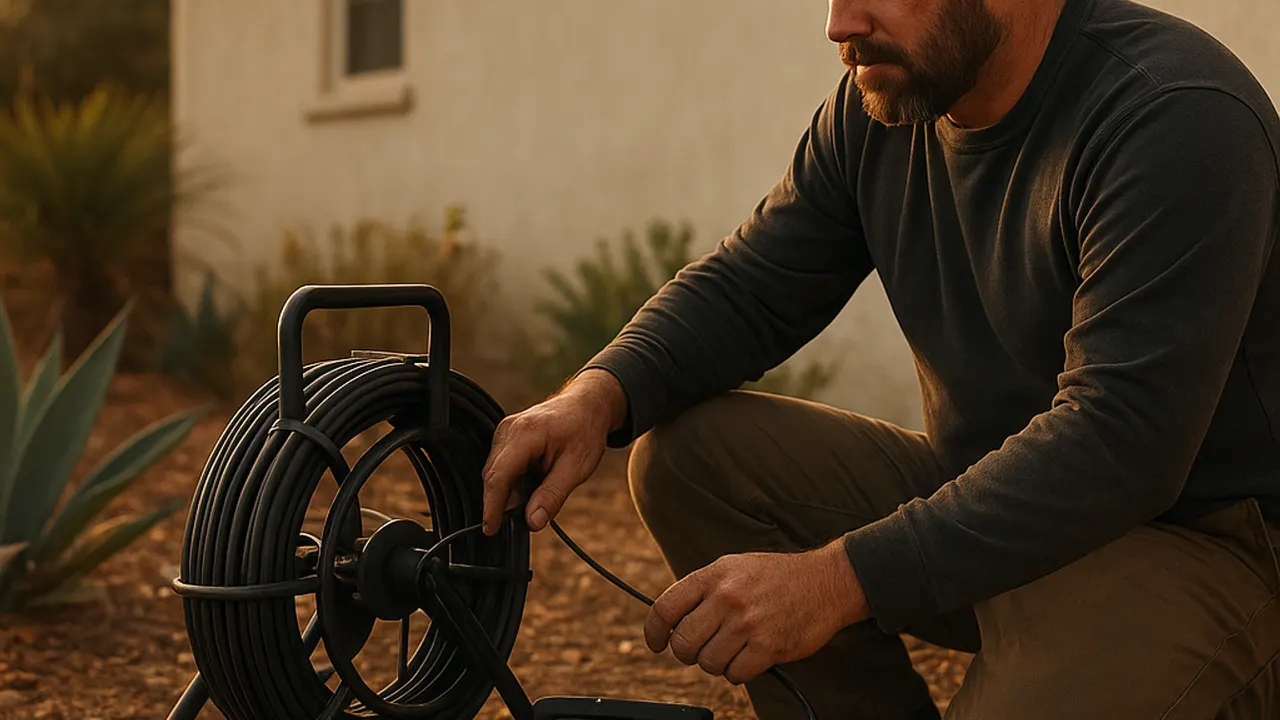
To prepare for a home sewer camera inspection, locate the sewer cleanout, clear a path to it, and gather a short history of plumbing symptoms and prior repairs. You usually do not need to shut off the water or empty your home; just keep fixtures available and follow any instructions we give for your particular line.
That preparation helps us access the pipe efficiently and interpret what the camera shows, whether we are checking recurring backups, a suspected break, or a home purchase concern in Whittier. A home sewer video inspection checklist is simple: identify the likely access point, move obstacles, note symptoms, and keep pets and children away from the work area. Here is what to do before we arrive, what happens during the inspection, and what details help us give you useful findings.
How to prepare for a home sewer camera inspection is a practical process that gives a technician clear access to the drain line and useful context to locate and document pipe problems. We use a flexible camera to inspect the pipe interior without digging up your yard first. Our Sewer Camera inspection Whittier CA service helps homeowners see what is happening inside the sewer line and understand the next step.
What to do before a sewer camera inspection
Before a sewer camera inspection in Whittier, clear access to the cleanout, note the plumbing symptoms, and leave the fixtures available for testing. These steps usually take 10 to 20 minutes and prevent avoidable delays once we arrive.
Start with the easiest preparation: move storage bins, gardening tools, patio furniture, or vehicles that block the cleanout route. A clear working area about 3 feet wide is helpful, and we need enough room to open the cleanout cap and handle the camera reel safely.
Write down when the problem occurs. For example, note whether a downstairs toilet bubbles when the washing machine drains, whether several fixtures back up at once, or whether sewage odors appear after rain. Those patterns help distinguish a local fixture clog from a concern farther along the main line.
- Find the cleanout, if you know where it is, and make it reachable.
- Move items that block the route from the driveway or gate to that access point.
- Keep children and pets away from the equipment and open pipe.
- Have recent repair invoices, inspection footage, or plumbing notes ready if available.
Preparing for residential sewer line inspection does not require you to dismantle plumbing or remove a toilet in advance. We will identify the best access point with you and explain if access needs a different approach.
How to find and prepare the sewer cleanout
In Whittier homes, the sewer cleanout is often a capped pipe near an exterior wall, in a side yard, or close to the front yard route toward the street. It may be a few inches above ground or set flush in a small box, so look for a round cap with a square or raised center.
Check areas around the home's foundation and along the likely path between the house and the public sewer connection. Do not dig or force a buried cap open. If you cannot find the cleanout after a quick visual search, tell us what you checked; we can help locate a suitable access point.
To make a sewer cleanout accessible for inspection, remove loose debris and move objects nearby, but leave the cap closed and intact. Avoid pouring chemicals into the pipe or using a wrench on a stuck cap, since a damaged fitting can leak or make access harder.
Homes in older parts of the city may have different cleanout locations or older fittings than newer construction. We regularly handle the access questions that come with Sewer Camera inspection in Whittier Historic District, where a property's age and layout can affect how we reach the line. If your home has a gated side yard, unlock it before the appointment and keep the route clear.
Should you stop using water before the inspection?
Most Whittier homeowners do not need to stop using water before a sewer camera inspection; avoid heavy water use only if we ask you to or if the line is actively backing up. Normal use helps us understand how the drain behaves, but a severe blockage changes the plan.
If every flush or laundry cycle causes water to rise, stop using the affected fixtures and tell us before the appointment. Continued discharge can worsen an overflow and make the work area unsafe. If only one sink drains slowly and the other fixtures work normally, you can usually keep using the unaffected plumbing.
We may ask you to run a faucet or flush a toilet at a specific point to observe flow or help move water through a line. You do not need to prepare buckets, shut off the main water valve, or leave taps running without direction.
For recurring backups in several fixtures, a Main sewer line camera inspection Whittier CA can help us look beyond the individual drain and check the main route leaving the house. Tell us if water is currently standing in a tub, shower, or floor drain so we can plan access and protect nearby flooring.
What to expect during a sewer camera inspection
A residential sewer camera inspection in Whittier usually takes about 30 to 90 minutes, depending on access, pipe length, and whether the camera encounters standing water or a blockage. The camera travels through an accessible opening, and we watch the live image as it moves through the pipe.
We begin by confirming the symptoms and choosing the cleanout or another suitable access point. After opening the access, we feed the camera through the pipe in a controlled manner, noting changes such as roots, cracks, offsets, buildup, or a low section holding water.
The camera head includes a light and sends video to a monitor. Many inspection systems also use a locating transmitter, which helps us estimate where a point of concern sits underground. A camera inspection shows the pipe's visible interior; it does not automatically repair a defect or guarantee that every section is visible if water, debris, or a tight turn blocks the lens.
You can stay nearby and ask us to explain what appears on the screen. We can point out where the camera is, what the image suggests, and whether a follow-up cleaning or repair evaluation makes sense. For homes with repeated stoppages, our Residential sewer camera inspection Whittier CA service focuses on the line serving the home and the conditions that may be behind the symptoms.
Typical 2026 pricing for a residential camera inspection in the Whittier area often falls around $150 to $500, with access difficulty, line length, and diagnostic scope affecting the quote. We explain the price before work begins so you know what the inspection covers.
What information helps the inspector?
The most useful information for a sewer camera inspector is a clear timeline of symptoms, the affected fixtures, and any known history of the line. Even a few notes can help us focus the inspection instead of treating every drain as an unrelated problem.
Before we arrive, consider the last time the plumbing worked normally and what changed. Note whether the issue began after a heavy rain, a renovation, tree work, or a previous drain cleaning. If the property has changed hands, ask whether the seller left inspection footage or repair records.
For a Sewer Camera inspection in Uptown Whittier, as elsewhere in town, street trees and mature landscaping can be useful context when roots are suspected, but appearance alone does not prove a root intrusion. Tell us what you have observed and let the camera confirm the pipe condition.
You can share:
- Which fixtures drain slowly, gurgle, or back up, and how often it happens.
- Whether the problem affects one bathroom or multiple areas of the home.
- Past sewer repairs, cleanings, root treatments, or camera inspections.
- Any access concerns, including locked gates, covered cleanouts, or a finished interior floor over the likely route.
That is enough to get started. You do not need to diagnose the pipe yourself.
Common mistakes to avoid
Common preparation mistakes in Whittier include forcing a stuck cleanout cap, hiding an active backup by running water, and clearing only the indoor route while leaving the exterior access blocked. Avoiding these problems protects the fitting and gives us a safer, clearer inspection.
Do not remove the cleanout cap before we arrive unless we have specifically asked you to do so. Wastewater can be under pressure, and a cap may be difficult to reseal if its threads or fitting are damaged. Also avoid using caustic drain chemicals immediately before the appointment; they can create a hazard for anyone working at the opening.
Do not assume the cleanout is always beside the front door or directly at the curb. A gate, planting bed, paved walkway, or later home addition can change the easiest route to the sewer line. If you are unsure, send a description when arranging the visit rather than digging to find it.
Finally, do not promise that a camera can pass through a fully blocked pipe. If the lens cannot move through accumulated waste or standing water, clearing the obstruction may be necessary before we can see farther along the line. We will explain what is visible and what is preventing a complete view.
When to call a professional
Call a sewer camera inspection professional in Whittier when several fixtures back up together, a sewer odor keeps returning, or the same drain problem comes back after clearing. These symptoms can point to a shared line issue that a plunger cannot identify.
Arrange help promptly if wastewater is rising through a floor drain or toilet, or if you see a wet area where the sewer line may run. Stop using affected fixtures and keep people away from contaminated water. For a single slow sink with no other symptoms, a local fixture issue may be more likely, but repeated problems deserve a closer look.
At Aron Leakage Master, we inspect the accessible line, explain what the camera shows, and help you understand practical next steps. If you are preparing for a home sale, dealing with a recurring backup, or simply trying to locate the cause, share the symptoms and we will help you plan the inspection.
Frequently Asked Questions
Do I need to prepare my home for a sewer camera inspection?
Yes. Allow about 10 to 20 minutes to clear access to the cleanout, move nearby obstacles, and gather notes about symptoms or past repairs. You do not need to take apart plumbing or clean the sewer line yourself. Keeping pets away from the work area is also helpful.
Should I avoid using water before the inspection?
Usually no; continue normal water use unless the line is actively backing up or we ask you to stop. If flushing or running the washer makes wastewater rise, stop using those fixtures and tell us before we begin. We may ask you to run water briefly during the inspection.
Where should I look for access to the sewer cleanout?
Start near the exterior foundation, side yard, or front yard route toward the street. Look for a capped pipe, often a few inches across, that may sit above ground or inside a small access box. Do not dig or force a cap open if you cannot locate it.
Does the inspector need to enter my home?
Not always. Many inspections use an exterior cleanout, so the work can remain outside; entry is needed only if the best access point is indoors or we need to check a fixture. Keep the relevant path clear, and let us know about locked gates or rooms that require access.
How long should I allow for a residential sewer inspection?
Allow 30 to 90 minutes for a typical residential inspection. A straightforward line with easy cleanout access may take less time, while a long run, difficult opening, or blockage can add time. Keep the appointment window free so we can review the camera findings with you.
Get help with Sewer Camera inspection in Whittier
Clear access and a few symptom notes are usually all you need to prepare for a useful inspection. Call Aron Leakage Master at 5625880964 to arrange Sewer Camera inspection in Whittier and discuss what your home's symptoms may indicate.